
Falls from height remain one of the most serious causes of workplace injuries, and exposed roof edges carry particular risk wherever workers, contractors or visitors need access. Choosing the right edge protection systems can help prevent falls before they occur, without relying solely on personal fall protection equipment.
For many projects, the decision comes down to two forms of roof edge protection: freestanding or fixed guardrails. Both are edge protection systems capable of providing permanent collective protection, but the right solution depends on the roof construction, access requirements and safety strategy. So what is edge protection, how is it classified, and when should each type be used?
What Is an Edge Protection System?
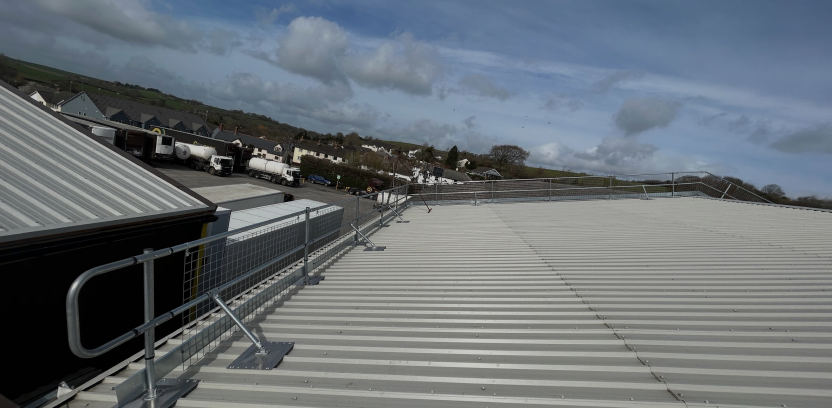
An edge protection system creates a physical barrier between workers and an exposed edge, wherever there is a possibility of a fall. Typical edge protection systems consist of upright posts, horizontal rails and, where required, toe boards.
Unlike personal fall protection systems such as lifelines and anchors, a roof edge protection system provides collective protection to everyone in the protected area. Once correctly installed, it requires no user input, making it a reliable form of fall prevention where maintenance requires repeated access.
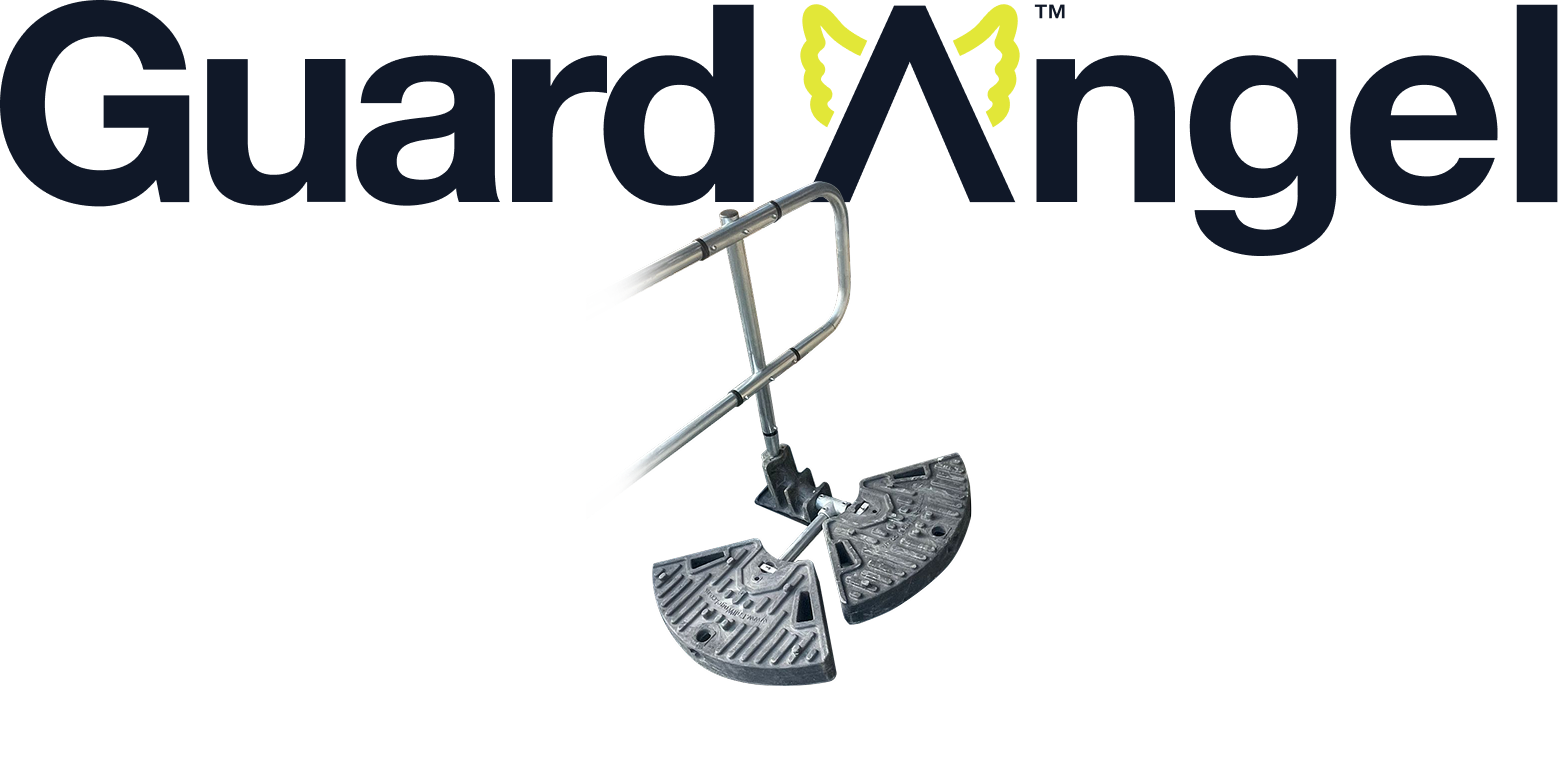
GuardAngel is FallAngel’s modular roof edge protection solution, configured as fixed or free standing edge protection depending on the building. GuardAngel is a barrier system and is not designed for use as an attachment point for fall protection PPE.
How Are Edge Protection Systems Classified?
The British standard BS EN 13374 groups edge protection systems into three classes according to roof pitch and load:
- Class A: flat surfaces and pitches up to 10°, supporting static loads
- Class B: pitches up to 30°, supporting low dynamic loads
- Class C: steep pitches up to 45° or 60° for short falls, designed for high dynamic forces
Roof edge protection is often also assessed against EN ISO 14122-3, which covers permanent means of access to machinery and plant, and BS 13700.
Free Standing Edge Protection: How Does It Work?
Free standing edge protection uses weighted counterweights to secure the guardrail without drilling into the roof surface, avoiding penetration of the roof membrane entirely.
A freestanding guardrail system is particularly suitable for flat roofs where drilling is undesirable, helping preserve the integrity of the roof. It should not be confused with temporary edge protection used only during construction; it can provide a fully permanent solution.
GuardAngel’s freestanding configuration uses counterweights made from recycled material, and its modular design accommodates different layouts, corners and changes in level. A folding, collapsible version is also available, which folds flat when not required to help preserve a building’s roofline.
Fixed Edge Protection: When Is It the Better Choice?
Fixed edge protection systems are permanently anchored to the roof or building structure by bolting, riveting or clamping, offering long-term security for areas accessed frequently. GuardAngel supports top-fix configurations for trapezoidal decking, standing seam roofs and concrete substrates, with bases suitable for rivet or clamp fixing up to 500mm crown centres and legs spaced no more than 2.5m apart.
The principal difference from a freestanding system is how it is secured. Rather than using counterweights, fixed protection connects directly to the substrate, creating a neat, permanent solution while reducing the footprint taken up by weighted components.
Freestanding vs Fixed Guardrails: What’s the Difference?
Neither form of roof edge protection is automatically better; the right system is determined by the building and how the roof is used.
Free standing edge protection is particularly useful when:
- Penetrating the roof membrane should be avoided
- A weighted solution suits the available roof space
- Flat roofs require collective protection
- A flexible, modular system is preferred

Fixed edge protection may be more appropriate when:
- The construction provides suitable fixing locations
- Mechanical fixing is acceptable
- Space for counterweights is limited
- The project calls for a permanently fixed solution
Can You Work on a Flat Roof Without Edge Protection?
Working on a flat roof without any edge protection is rarely advisable wherever there is a genuine possibility of a fall. The Work at Height Regulations 2005 apply to any risk of falling liable to cause injury, and most organisations treat exposed roof edges as requiring a control measure regardless of height. A permanent solution such as GuardAngel removes the need to reassess the risk on every visit.
Why Choose Collective Edge Protection Over Personal Fall Protection?
The purpose of roof edge protection is to prevent a fall, rather than arrest somebody after one has begun. Because protection is collective, it does not depend on each person connecting a harness or lanyard, which makes it effective on roofs needing frequent maintenance access, giving facilities managers peace of mind between visits.
Personal fall protection remains important where collective measures are unsuitable, but the two solve different problems. A complete safety strategy may combine guardrails with roof walkways, lifelines or other solutions as required.
GuardAngel: A Modular Range of Edge Protection Systems
GuardAngel offers a modular range built to accommodate different roof types: Free Standing Rigid, Free Standing Folding, Top Fix Trapezoidal, Top Fix Standing Seam and Top Fix Concrete, so the method can be selected to suit the building. This construction lets installers negotiate corners and changes in level, and installation must only be carried out by a trained, competent installer.
Compliance You Can Rely On
GuardAngel is designed to meet and exceed the relevant safety standards, tested to BS EN 13374:2013, BS EN 14122-3:2016, BS 13700:2021 and the BS 6399: Part 2 1995 Wind Code. This independent testing supports full compliance with the Work at Height Regulations 2005, giving specifiers confidence and helping reduce the risk of injuries on site.
Choosing the Right Edge Protection System
Effective roof edge protection starts with understanding the building, the exposed edges and how people will use the roof, accounting for construction, available space, access requirements and relevant regulations. FallAngel can help identify a suitable GuardAngel configuration and provide the technical support needed for a complete solution.
Contact our team to discuss your roof safety requirements.